
Red Ochre

/ red   oak • ur /

font size:  a  a  a

Brief description of Red Ochre:

It's composed mailnly of iron oxide, hematite which word comes from Greek, hema meaning blood.

Prehistoric dwellers may have discovered that unlike the dye colors derived from animal and vegetable sources (which we do not have traces anymore), the color that came from iron oxide deposits in the earth would not fade with the changing environment. For this reason, it is estimated that men traveled long and far to maintain a steady supply of red pigment. Throughout the Middle Ages and the Renaissance, it continued to be used by painters. Dug right out of the earth and shaped into sticks with knives, hmeatite chalks were ready for drawing. Natural red chalks, with their rich, warm color, were popular from about 1500 to 1900. Such artists as Michelangelo, Rembrandt and Antoine Watteau used this medium to produce some of the most coveted drawings in the world today. By the 18th century, synthetic red iron oxide pigments were being made in a laboratory setting. Called Mars Red, these pigments were found to have all the properties, including durability and permanence, of their natural counterparts. 


Names for Red Ochre:

Pronounciation: red   oak • ur
Alternative names: iron oxide mixed with different quantities and qualities of clay and other minerals is called red bole, cinabrese. Artificial variety: mars red
Word origin: The name "Red Ochre" comes from Greek ochros = yellow, pale yellow.
Non-English names:
German French Italian
Roter Ocker Ocre rouge naturelle Ocra rossa
Color Index (C.I.) PR102
Chemical name:

Anhydrous iron(III)-oxide


Source of Red Ochre:

Ochre comes in many varieties:

Natural mineral:

Red and yellow ochre pigments abound at the surface in Minas Gerais, Brazil. Pigments like these were readily made into paints by prehistoric peoples (such as the nearby Santana do Riacho, Lago a Santa) who would then paint with their fingers or with vegetable paint brushes.

Red ochre consists of silica and clay owing its color to iron oxide. It is found throughout the world, in many shades, in hues from yellow to brown, and faint blue. The best brown ochre comes from Cyprus.

Example of use by artists:

Beauty just needs earth
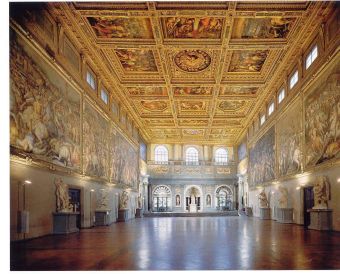
Hall of 500 in Florence, 1572

Medieval and Renaissance frescoes as the once painted by Giorgio Vasari on the walls of the Hall of 500 in Florence were made mainly by earth pigments, among which, red ochre.

Other reds
(intro) - Madder - Minium - Realgar - Red ochre - Vermilion

 Sections:  

  purples  

  blues  

  greens  

  yellows  

  oranges  

  reds  

  whites  

  browns  

  blacks