

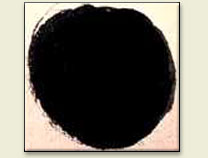
Painted swatch of Bone black.
Brief description of Bone black:
Bone black is blue-black in color and fairly smooth in texture and also denser than lamp black. It contains about 10% carbon, 84% calcium phosphate and 6 % calcium carbonate. It is made from charring of bones or waste ivory. It was used from prehistory and it is in use until today. Ivory Black is therefore the least pure form of carbon black, containing a high percentage of calcium phosphate.
Names for Bone black:
| Alternative names: | ivory black, bone charcoal | ||||||
| Non-English names: |
|
||||||
| Origin: | animal | ||||||
| Chemical name: | calcium phosphate + calcium carbonate +carbon |
Example of use by artists:
Rembrandt loved bone black

Rembrandt, portrait of Phillips Lucasz, National Gallery, London.
Studies of several paintings by Rembrandt using the technique of neutron activation autoradiography have shown the widespread use of the bone black in the initial wash-like sketch over the ground layer. Unusually, unmixed bone black pigment was used to paint the darkest parts of the clothing in the portrait of Phillips Lucasz.
 Sections: