

A painted swatch of Madder lake (Alizarin):
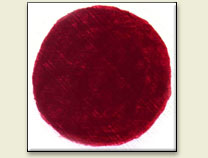
Brief description of Madder lake (Alizarin):
Natural dyes from plants (e.g. Madder) added to a white base or substrate. Dyes include dozens of hydroxyanthraquinones (e.g., alizarin) from plants. It is one of the most stable natural pigments. Madder was formerly used in large quantities for dyeing textiles and is still the color for French military cloth. The cultivation of madder root almost ceased after a synthetic method for making alizarin was discovered by German chemists, Graebe and Liebermann, in 1868.
Names for Madder lake (Alizarin):
| pronunciation: | uh • lih • zuh • ruhn | ||||||
| Alternative names: | Artificial variety: alizarin | ||||||
| Word origin: | The name "Madder lake (Alizarin)" comes from Old English word mædere. | ||||||
| Non-English names: |
|
||||||
| Chemical name: | 1,2-dihydroxyantraquinone |
Example of use by artists:
n/a
 Sections: