

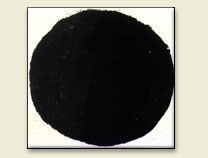
A painted swatch of Carbon black:
History of Carbon black:
Used throughout history, carbon black is easy to prepare and has excellent hiding power. Since carbon absorbs light so well, it often appears dark with infrared imaging, revealing an artist's charcoal sketch under the painting. The name carbon black is generally used as a generic name for those blacks that are made from the partial burning or carbonizing of natural gas, oil, wood, vegetables and other organic matter. In 1864, a process was developed in America for a black more suitable for watercolor. It was widely employed in 1884. The American process used natural gas as the raw material. The smoky flame resulting from the burning of natural gas was first directed to cool revolving metal drums. The black deposits were automatically removed from the sides of the drums with scrapers. The resultant powder was of a finer grain than other blacks allowing it to spread better in watercolor. It was a stable pigment, unaffected by light and air.
When was Carbon black used?
| Discovery | Used until |
|---|---|
| prehistory | continues in use |
Use of Carbon black among paintings in the SchackGallery, Munich:

Source: Kühn
 Sections: