

Listing of books
 Bibliography
« Previous            


Art & Optics · Bibliography

Recommended Books

A working bibliography for the Hockney–Falco thesis — the proposition that Renaissance and Baroque painters used optical aids (camera obscura, camera lucida, concave mirrors) to achieve their startling realism. The list spans Hockney’s own argument, the Vermeer-and-the-camera-obscura tradition, broader histories of optics in art, and several skeptical responses for balance. Affiliate links to Amazon support WebExhibits.

The Hockney–Falco Thesis — The Primary Source

  • Secret Knowledge (first edition)

    Secret Knowledge: Rediscovering the Lost Techniques of the Old Masters

    David Hockney · 2001 (first edition)

    The book that launched the controversy. Hockney lays out his visual evidence — pinned to a long “Great Wall” of reproductions in his studio — that painters from Van Eyck onward used lenses, mirrors and projections to capture optically “true” detail. Lavishly illustrated; written for general readers.

    View on Amazon →
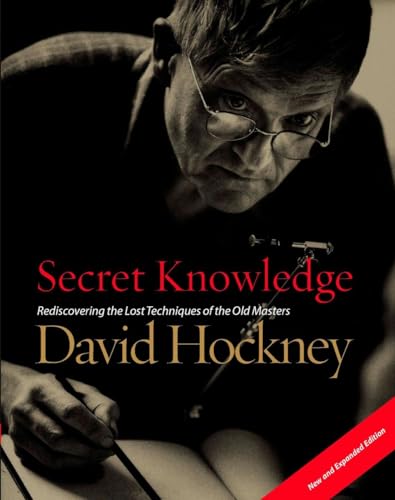
  • Secret Knowledge (New and Expanded Edition)

    Secret Knowledge (New and Expanded Edition)

    David Hockney · 2006

    Expanded paperback edition with a new chapter responding to critics, additional plates, and Hockney’s correspondence with art historians and scientists in the years after the original publication. The version most readers should start with.

    View on Amazon →

Vermeer and the Camera Obscura

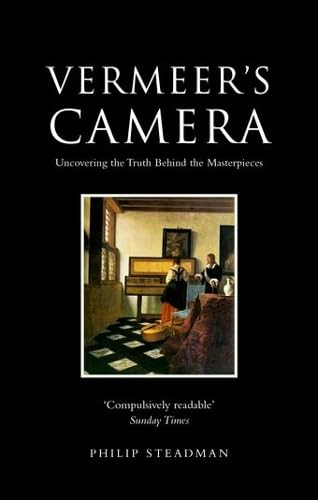
  • Vermeer's Camera

    Vermeer’s Camera: Uncovering the Truth Behind the Masterpieces

    Philip Steadman · 2001 (paperback 2002)

    An architect-historian reconstructs the rooms in Vermeer’s house and shows that six paintings are projections of identical optical setups — strong, focused evidence for camera obscura use in one studio. Scholarly but readable.

    View on Amazon →
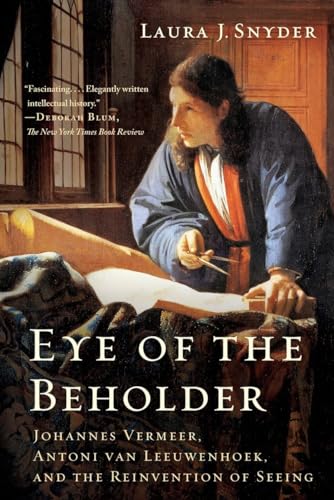
  • Eye of the Beholder

    Eye of the Beholder: Johannes Vermeer, Antoni van Leeuwenhoek, and the Reinvention of Seeing

    Laura J. Snyder · 2015

    A double biography set in 1670s Delft, weaving Vermeer’s painting practice together with Leeuwenhoek’s microscopy to argue that lens technology reshaped both art and science at the same moment. General-reader trade book.

    View on Amazon →

Hockney in Conversation — Lawrence Weschler

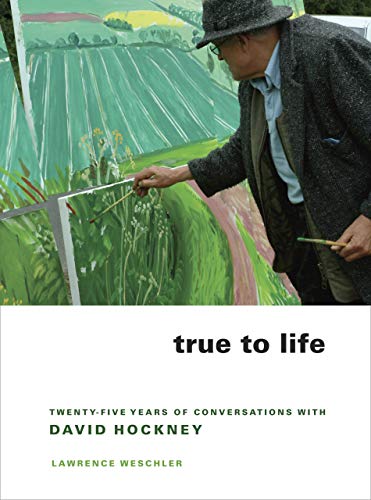
  • True to Life

    True to Life: Twenty-Five Years of Conversations with David Hockney

    Lawrence Weschler · 2008

    Weschler’s collected New Yorker pieces and private conversations with Hockney from 1984 to 2008, including the period of the optics research. The clearest narrative account of how the “secret knowledge” project actually unfolded.

    View on Amazon →
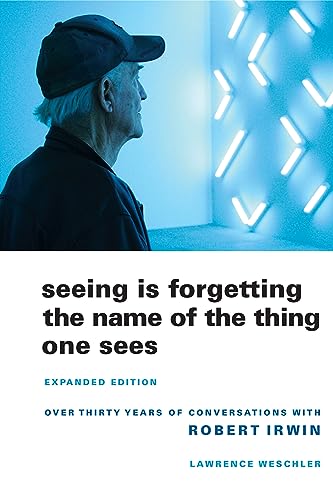
  • Seeing Is Forgetting the Name of the Thing One Sees

    Seeing Is Forgetting the Name of the Thing One Sees: Over Thirty Years of Conversations with Robert Irwin

    Lawrence Weschler · 2008 (expanded edition)

    Companion volume on the California light-and-space artist Robert Irwin. Not about Hockney, but the indispensable Weschler text on how artists actually look at the world — the same sensibility he brings to the Hockney conversations.

    View on Amazon →

Optics, Instruments, and the Wider History

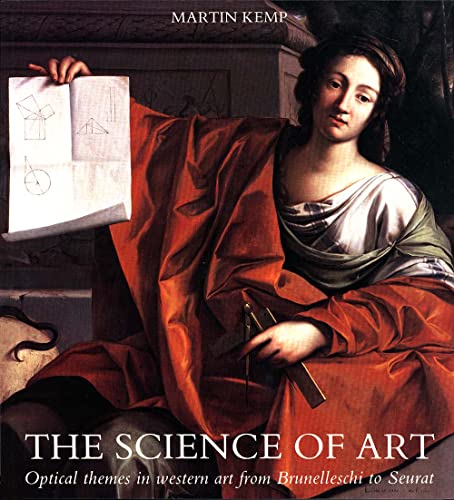
  • The Science of Art

    The Science of Art: Optical Themes in Western Art from Brunelleschi to Seurat

    Martin Kemp · 1990

    The standard scholarly survey of the long entanglement between optical science and Western painting — perspective, camera obscura, color theory, photography. Dense, illustrated, indispensable; cited throughout the Hockney–Falco debate.

    View on Amazon →
  • The Camera Obscura: A Chronicle

    The Camera Obscura: A Chronicle

    John H. Hammond · 1981

    The reference history of the instrument itself, from Alhazen and Della Porta through the Victorian portable boxes that preceded photography. Older but still the fullest single account. Specialist title; check used copies.

    View on Amazon →
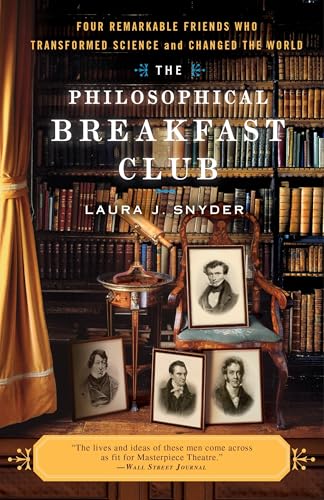
  • The Philosophical Breakfast Club

    The Philosophical Breakfast Club: Four Remarkable Friends Who Transformed Science and Changed the World

    Laura J. Snyder · 2011

    Group portrait of Babbage, Herschel, Whewell and Jones — the Cambridge circle that, among much else, gave photography its early scientific footing. Useful background on the nineteenth- century optical culture that absorbed the camera obscura tradition.

    View on Amazon →

Skeptical Responses — For Balance

  • Critical responses by David G. Stork

    David G. Stork · 2004–present

    Stork is the leading skeptic of the Hockney–Falco thesis; his counter-arguments appear chiefly in conference papers (SPIE, IS&T) and journal articles rather than a single trade book. The linked search collects his writings on computer-vision analysis of Old Master paintings. Specialist level.

    Search on Amazon →
Amazon links use the WebExhibits Associates tag webexhibits; purchases support the exhibit. Cover images for newly added titles are served locally from /hockneyoptics/images/; the Hockney cover preserves the exhibit’s original asset at /hockneyoptics/i/HockneyBookCover.jpg.

< Previous      
https://www.webexhibits.org/